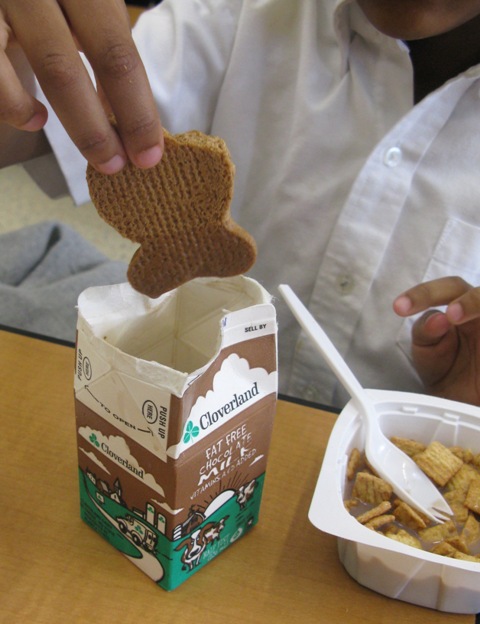
“We knew that people were going to have strong feelings about this and were concerned that overall milk consumption would drop,’’ said Dr. Lauren Smith, medical director of the Department of Public Health. “We wanted to give schools time to prepare so it can be done in a seamless way.’’ Studies have shown that when flavored milk is banned, milk consumption drops slightly but then rebounds, she said.
Monday, July 18, 2011
Massachussetts Bans Chocolate Milk
Thursday, June 30, 2011
And Now for Some Good News About School Food: Breakfast in the Classroom
By Ed Bruske
aka The Slow Cook
When I worked in Berkeley's central school kitchen a year ago one of the things that impressed me most was something I'd never heard of before: breakfast served in the classroom.
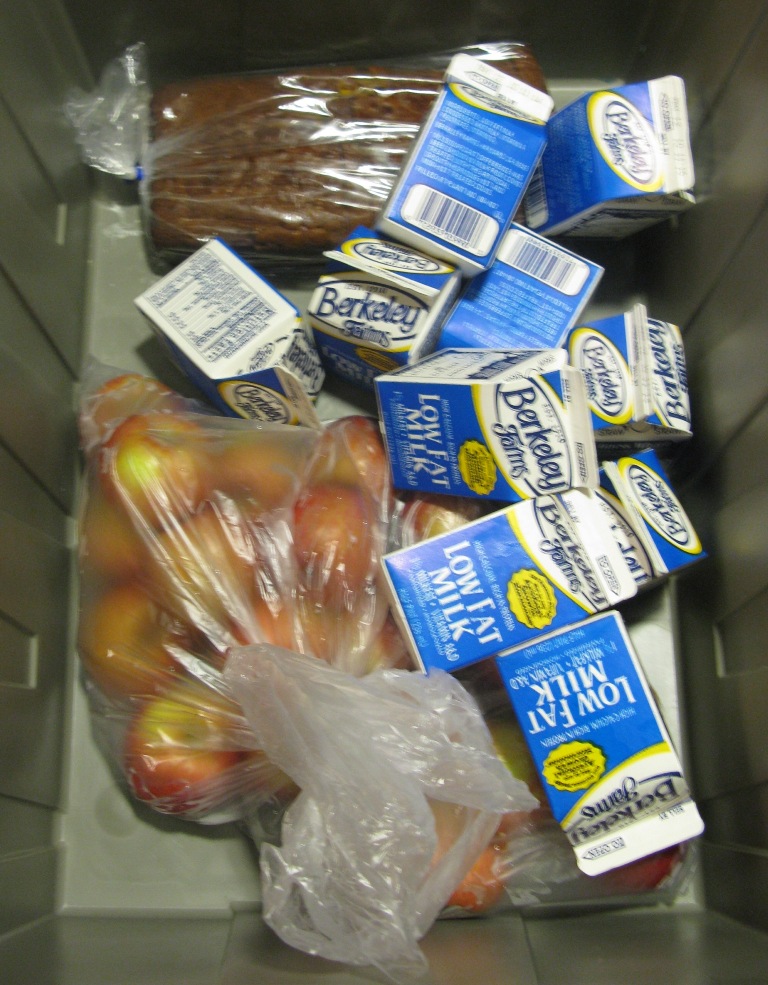
Every morning at the crack of dawn we'd start loading plastic bins. The meals were so simple: a loaf of banana bread, a bag of kid-size apples, cartons of plain milk. Sometimes there might be yogurt, or packets of Nature's Path organic cereal. At Martin Luther King Jr. Middle School, the bins were rolled out on shelves to the front of the "dining commons" where students soon arrived in pairs to carry them to their classrooms.
It couldn't have been easier. Yet participation was nearly 100 percent, and because of a quirky California real estate tax law, breakfast in Berkeley generated "meals for the needy" funds on top of federal subsidy dollars, helping to pay for a scratch-cooked lunch.
When I left Berkeley, I wondered why every school district hadn't thought of breakfast in the classroom. But now many of them are. In fact, this may be the hottest new trend in school food.
"Breakfast is such a winner on so many levels. But it’s a federal program that’s underutilized," said Madeleine Levin, a senior policy analyst with the Food Research and Action Center (FRAC), which advocates on food access issues in schools. Most schools offer breakfast, but fewer than half of all children eligible for a free or reduced-price breakfast actually eat one. Last year 1.97 billion breakfasts were served in the federally-subsidized meal program nationwide, fewer than half the number of lunches--5.28 billion.
FRAC last year was one of several groups--including the National Association of Elementary School Principals Foundation, the National Education Association Health Information Network, and the School Nutrition Foundation--that partnered to help start classroom breakfast programs in five school districts: Dallas, Little Rock, Memphis, Prince George's County, Md., and Orange County, Fla. They received $3 million from the Walmart Foundation, about $2 million of which went to the schools, mostly to pay for equipment, such as refrigerators and coolers.
"Some principals felt uncomfortable changing their routines, as did some teachers and food service directors. We were able to address those groups at the school level to show them how this can work, how there can be a constructive process to plan and implement a program that benefits everyone," said Levin. "The power of the funding was to meld the partnership together."
According to Levin, it doesn't take much to start a classroom breakfast program. Yet research demonstrates that when children gather around breakfast in a familiar classroom setting, readiness to learn increases while tardiness and discipline problems decline. Eating breakfast also fights obesity. "It will benefit them for the rest of their life," says Levin. "It's proven in research to have a real impact."
Here in the District of Columbia, there's been a marked increase in the number of children eating breakfast since breakfast in the classroom was implemented a year ago. Breakfast is served free to any D.C. Public Schools student who wants it. In 37 elementary schools where breakfast is served in all classrooms, participation stands at 78 percent, an increase of 26 percent from the year before. Meanwhile, in elementary schools that serve breakfast only in the cafeteria participation is just 10 percent.
D.C. Hunger Solutions has been working closely with local schools to make the new breakfast program a success.
Levin doesn't advocate breakfast in the classroom as a money maker, but school food consultant Kate Adamick does. Especially in districts with large numbers of needy students, federal subsidy dollars can more than pay for breakfast, meaning extra cash to help support the entire meal program. In "severe need" schools, the federal reimbursement rate is $1.76, compared to the usual $1.48.
Adamick says the break-even point for schools typically occurs when at least 50 percent of the student body qualifies for a free or reduced-price meal. "For districts that exceed 60 percent free and reduced, breakfast in the classroom programs generally result in significantly increased net revenue for school districts," Adamick said. "The higher the level of free and reduced kids, the higher the net revenue generated."
Schools can increase the profitability of breakfast by cooking more from scratch, Adamick says. "The good news is that simple scratch-cooked breakfast meals are often much less expensive than the highly processed products that are currently served in most schools, which helps keep the costs in line and lowers the free and reduced levels necessary for a financially viable breakfast in the classroom program. "
The USDA's proposed new meal guidelines could upend that math, however. By requiring more whole fruit, whole grains and adding a 1-ounce serving of meat (or meat alternate), the guidelines would add a whopping 51 cents to the cost of serving breakfast. Some school administrators say they may have to drop breakfast altogether.
Parents often express concerns that eating breakfast in the classroom will eat into the time children have available to learn. But teachers and school administrators say children are more focused when breakfast is served in the classroom, and eating a meal together creates a family atmosphere. At a school I visited in Boulder--Columbine Elementary--the beginning of the school day was moved up--from 8:30 to 8:15--to make room for breakfast in the classroom.
I watched the kitchen manager, Margaret Traverton, load bins with apples, breakfast bars, and milk, then wheel the bins around the school on a cart, dropping them outside classroom doors. I went back a few minutes later to watch the children unload the bins and arrange breakfast at their desks. Assigning kids tasks--like unloading bins, or collecting trash--gives them a sense of responsibility, and takes some of the load off the teachers.
Chicago instituted breakfast in the classroom in all of its schools this year, sparking loud complaints. But Levin attributes the discontent there to requiring that breakfast be served in classrooms in even the most affluent schools, where many children may not need it. "The concerns are coming from a small group of parents," said Levin. "In other districts where they’ve gone district-wide it’s worked really well—Houston and Newark, for instance.
Here in D.C., schools where less than 40 percent of students qualify for free or reduced price meals can opt not to serve breakfast in classrooms. It's offered in the cafeteria instead.
Levin says many other school districts are exploring the breakfast-in-the-classroom option. FRAC has received more than 100 inquiries just from its website. But the next frontier is getting older kids interested in eating breakfast. At one high school here in D.C., I met with students who would rather grab a bag of chips at a corner convenience store than eat a breakfast for free at school.
"If you talk to marketing people they’ll tell you that making something free doesn't necessarily make it attractive," said Levin. "It’s not cool. Or to use a more modern term, it’s not 'fresh.' They’d rather hang out in the hallway with friends."
In D.C. last year, middle school participation in breakfast was just 21 percent. It was even less among kids in high school: only 11 percent.
So how do we make breakfast "fresh?"
This article originally appeared at the Beyond Breakfast blog.
Wednesday, June 29, 2011
What's for Lunch: Local Beef

By Andrea Northup and Anna Chute
Lisa Dobbs, Chef and Nutrition director at E.W. Stokes, will stop at nothing to make sure that the 350 students she serves each day have healthy, delicious meals. Cooking from-scratch and using no processed foods, she and her staff prepare breakfast, lunch and supper in their antiquated kitchen for the school’s population of mostly low-income students. Lisa incorporates fresh, locally-grown foods whenever possible, especially on the school’s salad bar. And she works with the rest of the school staff to ensure that the school’s garden, nutrition and wellness programs are coordinated with her healthy menus.
As the Director of the D.C. Farm to School Network, I heard about Joy Evans from a friend who works in a local farm-to-table restaurant. Joy and her husband operate a business called Shenandoah Foods, which delivers meat, cheese and eggs from Virginia’s Shenandoah Valley to Washington, DC-area restaurants. Joy takes a delivery fee from her clients to run her business, and then farmers deal directly with customers to handle food costs. I reached out to see if she might be interested to work with Washington, DC schools.
Getting local meats into school meals is difficult. Most schools buy pre-cooked commodity meat from large distributors. It’s cheap (less than $1 per lb) and can be ordered in the evening and delivered the next morning – a system that’s hard to beat. But we’re not quite sure where it comes from, and it’s not always the highest quality product. But with about $1 per meal to spend on food, school food service directors have to make difficult choices about what they can afford.
I invited Joy and her husband to Washington, DC to meet with a few schools interested in buying local meat. We had a lively discussion about what products schools want, how much they need, what prices they can afford, and how to handle invoicing and delivery. We tried some delicious cheeses, Virginia-grown ground beef hamburgers, and fresh yogurt with local berries. If your mouth isn’t watering, it should be - the school food service providers could taste difference.
Joy and Lisa connected, and decided on a trial-run of 200 pounds of lean ground beef for $2.60 per pound. Joy picked up the meat from D&M Meats in Harrisonburg, VA in her refrigerated van, and delivered it to E.W. Stokes in conjunction with her regular restaurant deliveries. Lisa and her team expertly sautéed and seasoned the ground beef, and served it with pico-de-gallo, tortilla chips, and fresh guacamole. The result? A delicious and healthy meal for hungry students, which put money into our local economy, supported a sustainable small producer and made clean-beef fans out of Stokes’ young scholars.
Lisa Dobbs, Food Service Director at E.W. Stokes says the quality of the Virginia-grown beef is unparalleled. There isn’t murky liquid left over after cooking – something she’s used to with the lower-quality products. “We would never go back to the beef we were cooking before! We would drop beef from our menu entirely if we had to go back,” says Lisa.
Lisa can’t serve local meat every day, but it’s on the menu about once or twice a week, and they are looking to incorporate other items like chicken and eggs. We’re working to get more schools on board, and we’re excited for the potential to grow this partnership.
Andrea Northup is manager of the D.C. Farm to School Network. Anna Chute is the network's intern. This article originally appeared on the Arcadia Center for Sustainable Food and Agriculture blog.
Tuesday, June 28, 2011
D.C. Schools Chancellor Defends Decision to Ditch Chocolate Milk
By Ed Bruske
aka The Slow Cook
D.C. Public Schools officials apparently have no intention of reinstating chocolate milk in local cafeterias despite a recent grilling by D.C. Council Chairman Kwame Brown and the pleadings of a first-grader who polled his fellow students.
In an e-mail to Brown dated June 22, newly-confirmed schools Chancellor Kaya Henderson says the decision to remove chocolate and strawberry-flavored milk from schools was part of an ongoing effort to make school food healthier, that the sugar in flavored milk puts many students at risk of obesity and heart disease, and that not serving more expensive flavored milk frees money that can be used to improve the the quality of meals served.
During recent confirmation hearings before the council, Brown tried to get Henderson to commit to bringing flavored milk back to city lunch lines based on findings of a 7-year-old student at Lafayette Elementary School that 58 percent of his school mates do not drink milk. "Kids won't drink milk unless it's chocolate," Brown said. The boy questioned why chocolate milk had been removed when schools continue to serve fruit juice that contains as much sugar as flavored milk, but not the protein.
In her e-mail to Brown, Henderson noted that Los Angeles schools, the second-largest school district in the country, recently opted to remove chocolate milk and that other school districts appear poised to do so as well. As for juice, Henderson said the sugar in fruit juice occurs naturally, unlike that added to flavored milk, and that juice is only served once per week in D.C. schools as a replacement for whole fruit.
A debate over the chocolate milk issue played out recently in Washington Post reporter Mike DeBonis' column after I broke the news in this blog about Kwame Brown's interrogation of Henderson. The father of the Lafayette Elementary student, Chris Murphy, wrote DeBonis insisting that his son "is not a dairy lobbyist." But a copy of the boy's testimony has since been widely circulated by the National Dairy Council as evidence that kids prefer chocolate milk to plain milk and risk not getting enough calcium to build healthy bones without it.
Chocolate milk has become a flash-point issue in the battle to improve the quality of food served in the nation's schools. The dairy industry spends tens of millions of dollars promoting chocolate milk as an alternative to soda and other soft drinks. While sales of plain milk have plummeted in recent decades , sales of flavored milk have tripled. But some health experts have become concerned about chocolate milk's roll in promoting children's consumption of sugar and say that kids can get the calcium they need from a range of other foods.
My reporting of D.C. school food indicated that as recently as a year ago, children were being offered the equivalent of 15 teaspoons of sugar with breakfasts in which chocolate and strawberry-flavored milk were served alongside Apple Jacks cereal, Pop-Tarts, Giant Goldfish Grahams, Otis Spunkmeyer muffins and fruit juice. Under the aggressive approach taken by food services Director Jeffrey Mills, schools have removed not only flavored milk, but also sugary cereals and processed foods.
Henderson says the response to D.C. schools removing flavored milk "has been positive."
Here is the full text of Henderson's e-mail to Brown:
Chairman Brown--
In response to the discussion that arose during my confirmation hearing, I would like to share information with you about our decision to eliminate flavored milk from our menus.
The decision to stop serving flavored milk in DC Public Schools (DCPS) was made in support of our goal to serve healthy, natural foods to our students that are additive, artificial flavoring and coloring-free. This change was implemented, beginning last summer, in conjunction with new DCPS nutrition standards. Our new standards require that all menu items and competitive foods comply with the Institute of Medicine (IOM) standards, the federal HealthierUS Schools Challenge Gold Standard, and with our own district-specific standards which regulate/restrict sugar content in our meals.
Flavored milk contains significantly higher amounts of sugar and sodium than plain milk. An 8-ounce carton of flavored milk contains 14 grams (approximately 3 ½ teaspoons and 64 calories) of added sugar per serving. The American Heart Association recommends that no more than half of an individual’s discretionary calories come from added sugar. For young girls ages 9-13, for example, 8 ounces of flavored milk would constitute nearly a whole day’s added sugar allowance. Considering the fact that DCPS offers three meals a day, it is feasible that some students would choose to consume three cartons of flavored milk, thereby exceeding their recommended daily sugar intake by 128 calories. Other American Heart Association research cautions that the average child consume over 20 percent of their daily calories in the form of sugar, a habit that undoubtedly contributes to heart disease and obesity-related illnesses.
To the point that some have made about the amount of sugar in fruit juices, we mention that the sugar in juice occurs naturally, that all of the juice we serve is 100% juice, and we only serve it once per week as a replacement for fruit. Additionally, the amount of protein in milk does not vary between flavored and unflavored; some milk products have added milk solids (protein), but this additive is not unique to flavored milk.
DCPS currently serves only skim or 1% plain milk. Despite removing flavored milk and making significant menu changes, we are on track to serve nearly 2.5 million more meals this school year than last, meaning 2.5 million more milks have been purchased. Flavored milk also costs approximately $.05 more per carton than plain milk; and so, the additional volume comes at a cost savings to the District, allowing us to funnel more resources into buying more high-quality, healthy foods for our children.
Our Office of Food and Nutrition Services (OFNS) has been tracking district policies around flavored milk across the country. Just last week, Los Angeles Unified School District, the second largest in the country, stopped serving flavored milk, and according to indications within the school food service community, many other districts are planning to pull it in the coming school year.
While we do not take lightly the advocacy of our students, we also know that the District ranks 9th among all states with high overweight and obesity rates among adolescents ages 10-17 (DC DOH 2010 Obesity Report). It is also important to note that the majority of feedback we have received from the DCPS community regarding the decision to eliminate flavored milk has been positive. Spurred in part by the Council’s own nationally-recognized Healthy Schools Act legislation, we at DCPS have been working aggressively to develop nutritional health and fitness initiatives and approaches to help combat this challenge. Through this and other changes, DCPS hopes to give students the gift of a healthy palate and an active mind.
Sincerely,
Kaya Henderson
Friday, June 24, 2011
Big Dairy Loves 7-Year-Old's Take on Chocolate Milk, But He Needs a Fact Check
The National Dairy Council is circulating the testimony of a first-grader at Lafayette Elementary School who told the D.C. Council kids aren't drinking milk as much since chocolate milk was removed from the menu.
D.C. Council Chairman Kwame Brown last week grilled schools Chancellor Kaya Henderson on the subject during her confirmation hearings, trying to get Henderson to commit to reinstating chocolate milk in school cafeterias based on the 7-year-old boy's "research."
The boy's father, Chris Murphy, told Washington Post columnist Mike DeBonis that his son, Aidan Cohn Murphy, "is not a dairy lobbyist." But yesterday I was on the receiving end of a mass e-mail sent by Greg Miller, vice-president of science and research at the National Dairy Council, linking to Aidan's testimony with the words, "This kid did his homework."
Did he really?
Kwame Brown said he was impressed by the sleuthing Aidan had conducted, including a poll of 410 of his school mates to find that 58 percent are not drinking milk. (Apparently 42 percent are drinking plain milk, a lot more than are eating the green beans.) But a closer look shows that on several key points, Aidan got it wrong.
"We use to have chocolate milk in D.C. public schools," Aidan said in written testimony he submitted to the Council June 11. "But then you passed a law that said that no kids in D.C. Public Schools could buy chocolate milk. They could buy only white milk."
False. Apparently Chairman Brown thought Aidan was referring to the "Healthy Schools Act" the Council approved last year. But the act did not address flavored milk, nor does any other D.C. law. Removing flavored milk--which had included chocolate and even more sugary strawberry milk--was a decision made independently by school officials as part of an overhaul of school menus to make them healthier.
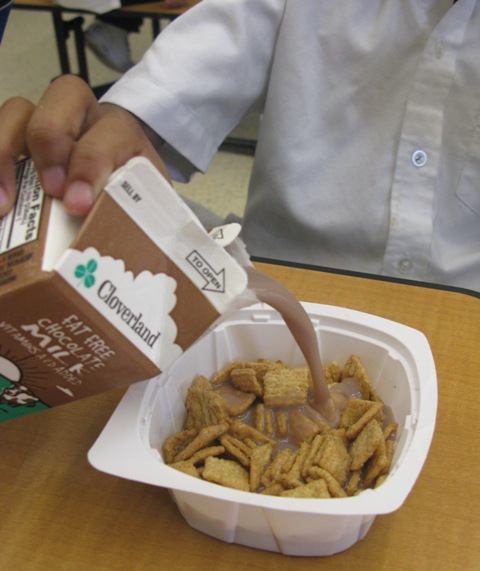
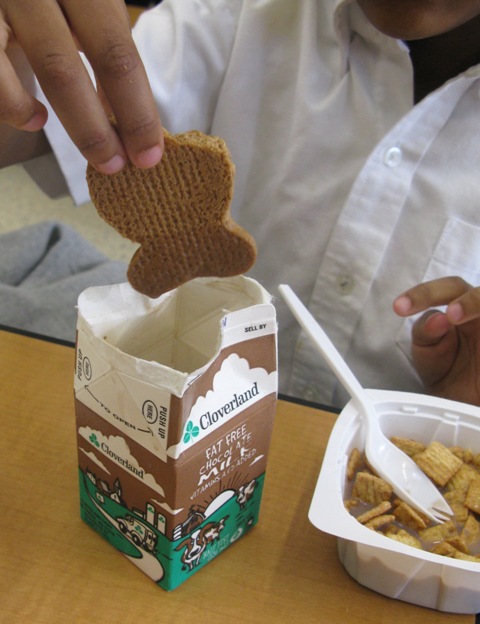
The chocolate milk from Cloverland Dairy the schools had been serving contained 14 grams of added sugar in the form of high-fructose corn syrup, or 3.5 teaspoons. “We’d like to teach students that sugar doesn’t need to be added to a natural food to make it ‘taste good,' " school food services spokeswoman Paula Reichel told the Post.
Aidan says that according to his survey, kids now substitute water for milk more than anything else. Many parents think that's a good idea. They don't believe milk is necessary. But Aidan went on to say that kids are substituting fruit juice for milk, and that would not be accurate. In D.C. elementary schools, children are required to take all of the offered food items at any meal. Milk is always offered. If juice is on the menu, they would be required to take that as well, not in place of milk. Juice typically is offered at breakfast, not so much at lunch. And at affluent schools like the one Aidan attends, breakfast participation traditionally is very low.
In proposed new meal guidelines, the USDA would make it more difficult for schools to substitute juice for whole fruit.
Aidan says Fairfax County also removed chocolate milk from the menu, but then brought it back with a "healthier kind of sugar." The truth is, sugar is sugar. There is no real difference between cane sugar and high-fructose corn syrup as far as your body is concerned, except that the corn syrup may contain a higher percentage of fructose. Both are equally bad. In fact, Robert Lustig, a specialist in pediatric obesity at the University of California, San Francisco, has called sugar "poison." The American Heart Association has linked it to risk factors for cardio-vascular disease in children. According to the heart association's guidelines, millions of children drink too much flavored milk.
Aidan said that as part of his research he interviewed a doctor who told him chocolate milk is "medium healthy" and "better than drinking soda." The policy of the American Academy of Pediatrics is that flavored milk served in schools can be a "healthful alternative" to sodas and other soft drinks. But D.C. schools have not allowed the sale of sodas or soft drinks since 2006. They are not available for sale in D.C. elementary schools, although some kids bring them from home.
According to this doctor, the calcium and protein in milk "are good--but the sugar is not good."
Aidan quotes a recent Washington Post article in which a USDA spokesman says the agency would rather have kids drink milk with added sugar than no milk at all. But there's something Aidan needs to know: the USDA's job is to promote dairy products. In fact, the USDA oversees the Milk Processors Education Program (MilkPEP), which collects money from dairies by congressional fiat in order to spend millions of dollars promoting the "Raise Your Hand for Chocolate Milk!" campaign.
The USDA designates milk as its own food group in the school meals program, and requires that it be offered at every meal. No other agricultural product receives such preferential treatment from the federal government. Still, sales of plain milk are only half what they were after World War II, while sales of flavored milk have tripled in since the 1970s. Chocolate milk is the dairy industry's way of competing with Coke and Pepsi. Big Dairy is desperate to keep kids drinking chocolate milk.
In other words, Aidan, there's very little difference between the dairy industry and the USDA when it comes to peddling chocolate milk to children.
Aidan, you should be listening to your doctor and your other schoolmates and just drink water if you don't like plain milk. Kids are not suffering a "calcium crisis," as the dairy industry would have you believe.
We know you and your friends love sugary chocolate milk. But you need to make the healthier choice and learn to like plain milk. What you should be lobbying the D.C. Council for is extra money the schools can use to install electric milk dispenser so kids can have fun pouring themselves glasses of cold, delicious white milk instead of the stuff they serve you in those miserable little cartons.
Thursday, June 23, 2011
Now Appearing on Jamie Oliver's Blog
By Ed Bruske
aka The Slow Cook
Have you read about my debate with a 7-year-old over chocolate milk in D.C. schools? It's been playing out the last couple of days in the Washington Post via columnist Mike DeBonis. Imagine, the Post has finally realized that there are real issues worth covering in our local cafeterias. What took them so long?
Pity that it takes a first-grader polling his fellow students and presenting it to the D.C. Council (with a little help from dad, no doubt) to get people's attention. But we're all for having the discussion. Jamie Oliver's people caught wind of it and asked me to write it up for his blog.
So here it is. Thanks, Jamie.
Wednesday, June 22, 2011
Wake Up, Parents! Or Let Kids Run the Cafeteria
By Ed Bruske
aka The Slow Cook
Suddenly a debate over chocolate milk in school is heating up in the pages of The Washington Post. Or should I say our hometown paper has finally noticed there's a food revolution going on in D.C. school cafeterias now that a first-grader has polled his fellow students and found--shock!--they are not drinking as much milk as some people think they ought to since chocolate and strawberry milk were taken off the menu a year ago.
Post columnist Mike DeBonis sounds downright sympathetic to the plight of these elementary schoolers in affluent Chevy Chase, 58 percent of whom (according to a 7-year-old's poll of about 100 school mates) are not drinking milk. But here's the good news: Apparently, 42 percent of the kids are drinking milk, and that's a lot more than are eating the green beans.
Notice, this dispute centers on something kids love--sugary milk. Nobody is conducting any surveys to see how many kids are shunning the vegetables or whole grains the USDA says kids need more of to avoid becoming obese. Having spent the last year and a half monitoring what kids eat in my daughter's elementary school here in the District, I'm here to deliver some bad news: obscene quantities of vegetables and whole grains are being thrown in the trash every day. In fact, I recently visited an elementary school cafeteria on Capitol Hill on a day when green beans were on the menu. I did not see a single child in the lunch room eating them. But they were all eating the hamburger. (Quite a few were drinking plain milk.)
There is no real secret to all of this. If we allowed kids to write the school menu, it would follow approximately these lines: Chicken nuggets, Tater Tots, pizza, hamburgers, French fries, chicken nuggets, pizza, french fries, Otis Spunkmeyer muffins, chocolate milk. Those are all things kids love.
Now, what are the adults serving instead? Bone-in chicken, whole grain buns, green beans, whole grain pasta, sauteed squash, roasted sweet potatoes, Caesar salad, bone-in chicken, plain milk. Which would you choose as the healthier menu? Would it surprise you to learn that the kids don't eat it? Why do you think that is? But note, also, there are no adults in the cafeteria talking to the kids about the food. Nobody is marketing the new menu to the children who are supposed to eat it. In other words, the adults really aren't following through to make this food revolution a success.
The real issue is not the sugar in chocolate milk. We already know kids love sugar. Look at the article I posted yesterday on the sodas and other sugary foods elementary school children bring to school from home. The problem is what chocolate milk stands for. More than any other item on the school menu, chocolate milk embodies our failure to pay attention to the way kids are eating, our surrender to a toxic food culture that embraces industrially processed convenience foods because they are easy shortcuts.
We teach children to expect sugar in their food, then we're surprised we have an obesity epidemic?
Yes, chocolate milk pretty much sums up our failure as adults to engage children in the more difficult act of eating thoughtfully, our willingness too often to just let kids eat what they want. Getting children to eat more green beans and less candy is hard work. But nobody said it would be easy.
It's high time we had this discussion. Hooray for first-graders researching the food question. But that doesn't mean it's time to bring back chocolate milk. It means parents (and maybe the Washington Post, too) need to pay more attention. If we want kids to drink more milk--and not everyone thinks that's necessary--then let's get kids to like plain milk.
Heck, while we're at it, we could pony up some more money for electric milk dispensers in the schools--cool machines like the ones I've seen in use in Berkeley and Boulder and other progressive school districts--so kids can help themselves to as much cold, delicious, organic plain milk as they like.
There you go, Council Chairman Brown. Why not do a little research into how we might fund milk dispensers in D.C. schools so kids don't have to drink the stuff in those cheap little cartons. I'm sure they would love pouring their own milk. And maybe if you offered kids really good plain milk, they would drink more of it. But that's not going to happen as long as chocolate milk is an option.
Yes, getting kids to eat more healthfully means getting more involved--with our time and with our wallets. But as my wife likes to say, this is a process, not an event. This revolution is just beginning, and there's lots more work ahead. Think about that before you try to undo the progress that's already been made.