Showing posts with label cake. Show all posts

Friday, January 13, 2012

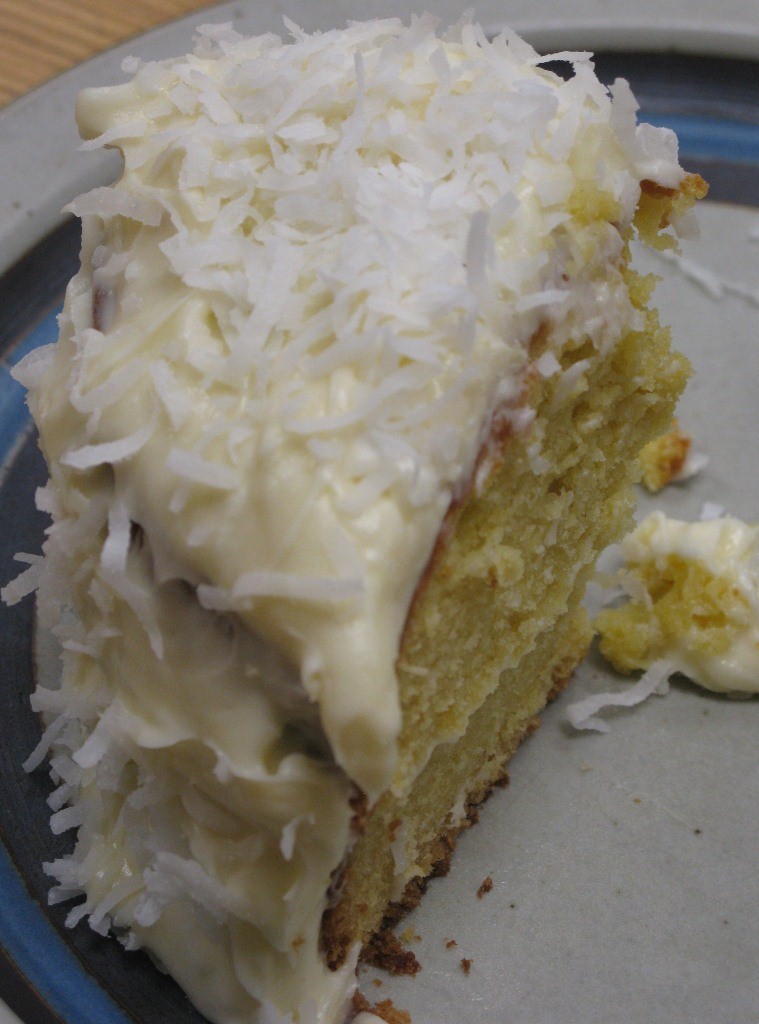
Kids Make Coconut Cake


It tastes as good as it looks

By Ed Bruske

aka The Slow Cook

Coconut cake is a tradition in southern parts of the United States, but it also reminds us that somewhere in the world it's warmer, even when the snow flies here.

Traditional coconut cake calls for at least two layers. That presented a bit of a problem for our baking classes, since a whole cake made according to the original recipe would have been far more than we could have eaten. I talked about this with my wife, the baking expert in our family, and we decided to cut the recipe in half, but use a smaller, taller cake pan so that we could cut the finished cake in half and still end up with two layers. So instead of baking in two standard 9-inch pans, we chose a single 6-inch pan that's 3 inches tall.

The only problem with this approach is that it throws the cooking time off a bit. The taller cake takes somewhat longer to cook all the way through the middle. After a bit of experimentation, we came up with an ideal cooking time of 58 minutes in a 350-degree oven. I also placed a sheet of aluminum foil over the cake when there was about 10 minutes left on the clock to prevent the top from browning too much.

The result is just a teensy bit of crustiness around the edges of this cake. But no one notices when the cake is finally frosted. And the finished cake is just the right size for a class of 12 kids, and more than enough for the typical family. Otherwise, you can simply double this recipe and go back to making two layers in separate 9-inch pans.

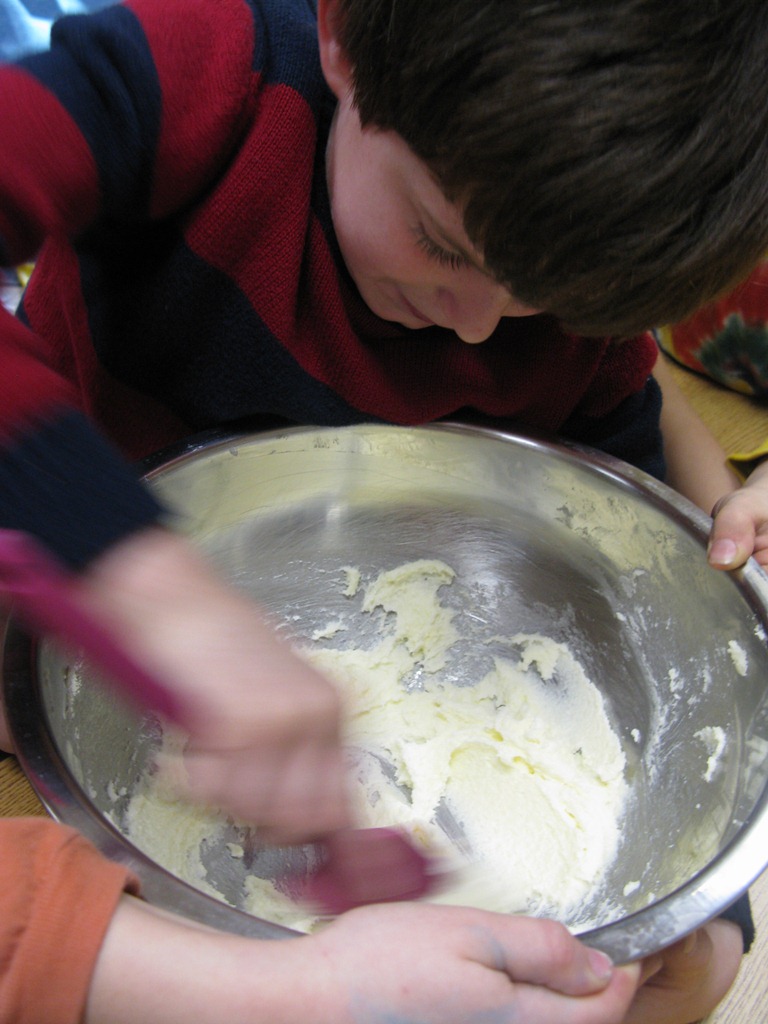
Start by creaming together 1 1/2 sticks butter (16 tablespoons) and 1 cup sugar. Most people would do this in an electric mixer, but we do everything by hand. I make it easier by allowing the butter to come to room temperature and soften overnight. After incorporating the sugar into the butter, beat at least five minutes with the back of a wooden spoon or a firm rubber spatula until the mix is fluffy and lighter in color. Then, beat in 3 eggs, one at a time, as well as 3/4 teaspoon vanilla extract and 3/4 teaspoon almond extract. At this point, the mix will look like scrambled eggs but smell more like marzipan.


Creaming butter and sugar

Meanwhile, in a separate bowl, sift together 1 1/2 cups all-purpose flour along with 1/2 teaspoon baking powder, 1/4 teaspoon baking soda and 1/2 teaspoon salt. Fold about 1/2 cup of the flour mix into the batter, followed by 1/4 cup milk, then another 1/2 cup flour mix and another 1/4 cup milk. Finally, fold in the remaining flour mix until it is just incorporated. Stir in 2 ounces shredded, sweetened coconut.

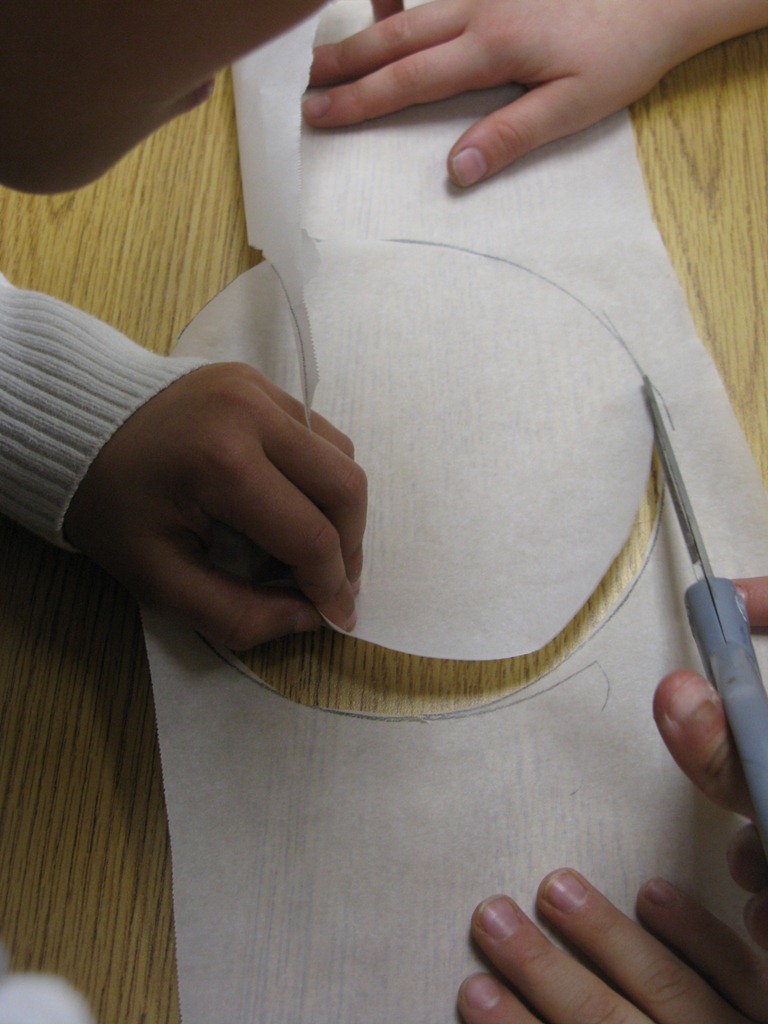
Prepare your can pan (or pans) by greasing well with butter or oil spray. We also cut a piece of parchment paper to fit into the bottom of the pan and gave it a spray of oil as well. Scoop the batter into the pan and tap it hard on your work surface to smooth it out. Place in the middle of a 350-degree oven and bake 58 minutes, or until a toothpick inserted into the middle of the cake comes out clean.

Allow the cake to cool for 20 minutes in the pan. Then use a sharp knife to trace around the edge of the pan. Invert the pan to remove the cake and place it on a wire rack at least an hour to cool. If making a smaller, taller cake as we did, slice the cake cross-wise to create two layers.


Cutting parchment paper

For the frosting, cream together 1 stick butter and 1 8-ounce package cream cheese. As I did for the cake, I left the butter and cream cheese out overnight to soften. Creaming them together with a rubber spatula is easy at that point. Add 3/8 teaspoon vanilla extract and a dash of almost extract. Stir well, then work 1/2 pound sifted confectioner's sugar into the mix and stir until very smooth.

Spread frosting over one of the cake layers, top with the second layer and spread the frosting all over the top and sides. Sprinkle the top of the cake liberally with shredded coconut and pat more coconut along the sides.

Hard as this may be to believe, some kids don't like coconut. But the ones who do will love you for making this cake. (So will your adult friends.)

Friday, January 6, 2012

Kids Make Orange Poppyseed Cake


A delicious cake with seasonal fruit

By Ed Bruske

aka The Slow Cook

What kind of fruit is seasonal in January?

That's the question I put to the kids in my food appreciation classes this week. The answer, of course, is citrus fruit. And where can you possibly grow fruit in the middle of winter? That's how cooking becomes a lesson about geography and climate. Toss in baking soda, baking powder and buttermilk and you also have a science experiment.

Everyone who tries this cake has the same reaction: "It's not too sweet." That's because the final flourish isn't a thick layer of sugary icing, but a drizzle of orange and lemon juice with just enough sugar added. It's an incredibly simple cake with just a few ingredients, but the poppy seeds also set it apart. The kids thought they looked like tiny blueberries, but then they remembered seeing them on bagels. Come to think of it, you don't see poppy seeds in many other foods.

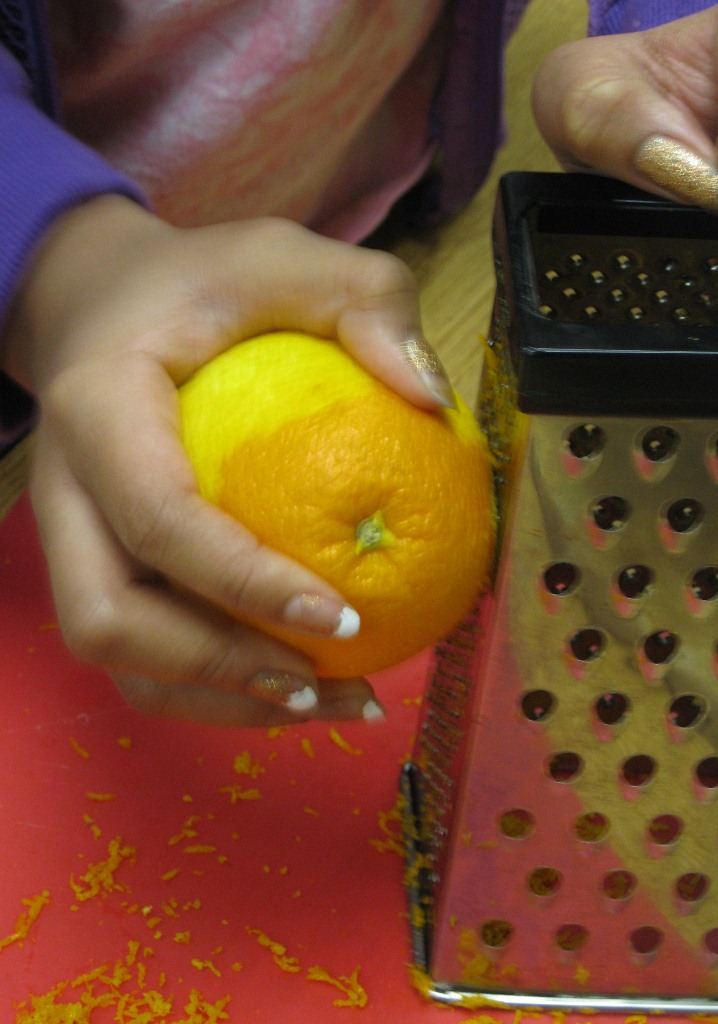
Start by creaming 11 tablespoons room-temperature butter (1 stick plus 3 tablespoons) along with 1 cup sugar, the grated peel of 2 oranges, 2 teaspoons baking powder, 1/4 teaspoon baking soda and 1/4 teaspoon salt. We grated the oranges on our old-fashioned box grater. It doesn't take long at all. But you could do the same thing with a micro-plane. And while we did the creaming with the back of a wooden spoon, most people would opt for an electric mixer. Just keep beating until the mix turns a lighter color and becomes somewhat fluffy.


Grating orange peel the old-fashioned way

To the butter mix beat in 2 eggs, one at a time. Then add 2 tablespoons poppy seeds. Mix in 2/3 cup buttermilk, then gently add 1 3/4 cups all-purpose flour. Stir, scraping the sides and bottom of the bowl, until the flour is completely incorporated.

Grease a 9-inch bunt pan (we used Baker's Joy) and pour in the batter. Actually, this batter doesn't really pour. We scraped it out with a rubber spatula, then smoothed the top even. Give the pan a good tap on your table top to help spread the batter around.

Bake in a 350-degree oven for 45 minutes, or until a toothpick inserted into the middle of the cake comes out clean. Invert the pan over a wire rack and let the cake cool.

To "ice" the cake, poke it all over with a toothpick. This will help the orange-lemon mix seep into the cake, rather than running off the sides. Then, in a measuring cup, squeeze out 1/4 quarter cup orange juice and the juice from 1/2 lemon. Add 3 tablespoons granulated sugar and stir until the sugar is complete dissolved. Carefully drizzle the liquid all over the top and sides of the cake. Slice and serve.

This cake would go perfectly with a cold winter's afternoon tea.

Saturday, February 26, 2011

Kids Bake Carrot Cake with Cream Cheese Frosting

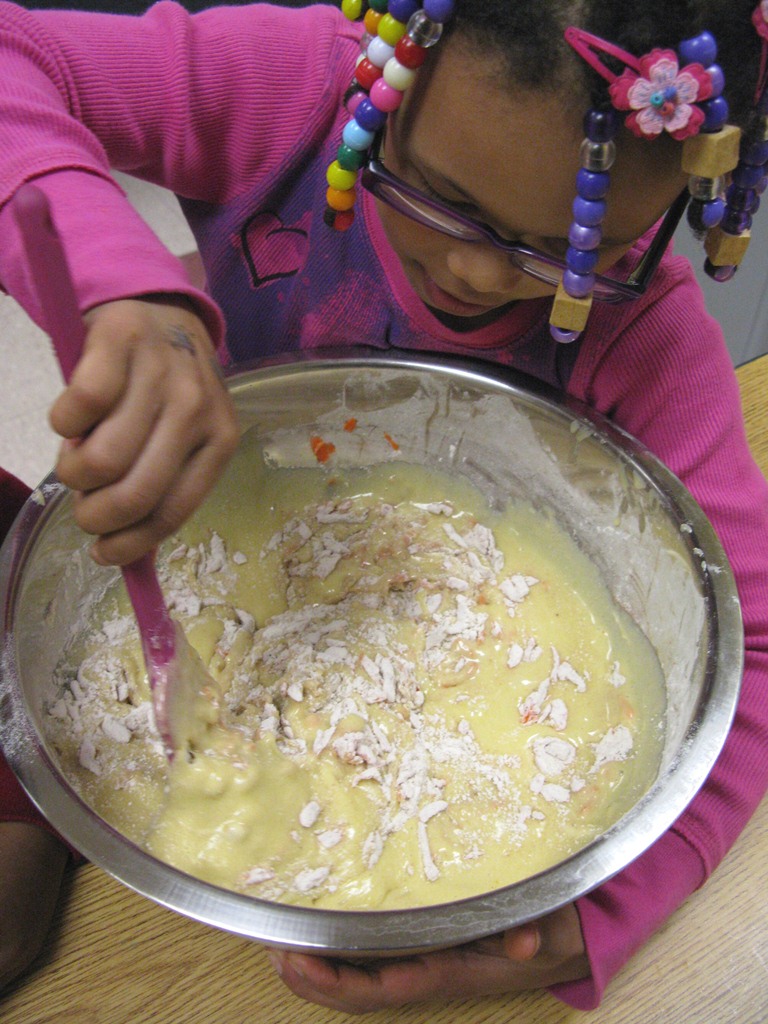
Mixing batter requires concentration

By Ed Bruske

aka The Slow Cook

This week marked our last session in this year's baking segment and I wanted the kids to end on a super-delicious note. So here's a carrot cake sure to satisfy the most demanding sweet tooth. Kids like sugar too much. So remember: food like this is intended as a special treat, not something to be consumed on a daily basis.

Carrot cake has the added advantage of requiring quite a bit of vegetable prep. That may not seem like an advantage to the average home cook. But if you are trying to keep a group of children busy in the kitchen, there's nothing like peeling and grating carrots. Hand a kid a vegetable peeper and she will occupy herself for the rest of the day.

This cake calls for a whole pound of carrots. We do everything by hand. But if you do not feel so inclined, feel free to plug in your food processed to speed up some of the chopping and mixing this recipe calls for.

First, prepare a 13-by-9-inch baking pan by greasing the inside of the pan, lining the bottom with a sheet of parchment paper and greasing the parchment paper. Set aside.

Kids will peel carrots all day

To the pound of peeled and grated carrots, add 2 1/2 cups unbleached all-purpose flour, 1 1/4 teaspoons baking powder, 1 teapsoon baking soda, 1 1/4 teaspoons ground cinnamon, 1/2 teaspoon grated nutmeg, 1/8 teaspoon ground cloves, 1/2 teaspoon salt. Mix well.

In a separate bowl, place 1 1/2 cups granulated sugar, 1/2 cup packed light brown sugar and 4 large eggs. Mix these together with a whisk and beat well until frothy and thoroughly combined. Continue beating while drizzling in 1 1/2 cups canola oil. Beat until the oil is completely emulsified.

Pour the wet mix into the dry mix and stir until all of the ingredients are incorporated. Pour the batter into the prepared baking pan and place in a 350-degree oven for 40 minutes, or until a toothpick inserted into the middle of the cake comes out clean. You might turn the pan from front to back halfway through the baking process.

Allow the cake to cool at least two hours before removing it from the pan. Invert it onto a cutting board or serving platter and prepare the frosting. Process 8 ounces softened but still cool cream cheese, 5 tablespoons unsalted butter softened but still cook, 1 tablespoon sour cream and 1/2 teaspoon vanilla extract. We used the back of a wooden spoon for this, but you can also use a food processor. When the mix is smooth, scrape down the sides of the bowl and add 1 1/4 cups confectioner's sugar. We used a rubber spatula to gently work the sugar into the cream cheese mix until it was completely incorporated and there were no lumps.

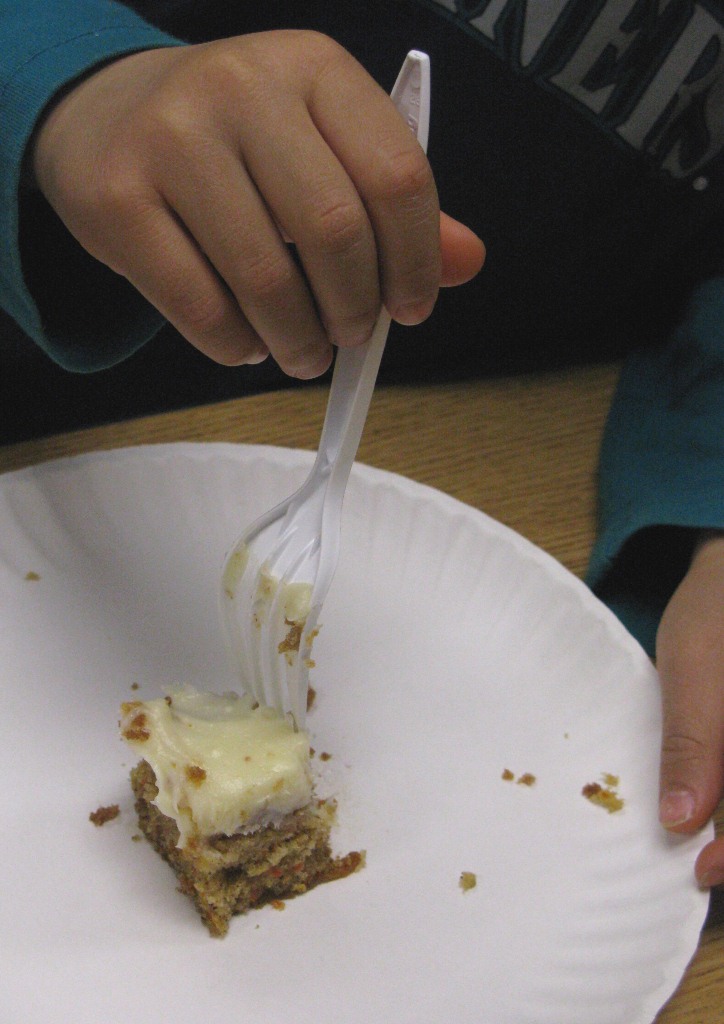
A dense and moist carrot cake

Use an offset spatula to first spread a thin layer of frost over the top of the cake. This will trap any crumbs so they do not show through when you spread the rest of the frosting.

Saturday, February 5, 2011

Kids Bake Orange Poppy Seed Cake

Applying elbow grease to cake baking

By Ed Bruske

aka The Slow Cook

Ever tried to cream butter and sugar with the back of a wooden spoon?

Most people would use an electric mixer. But we don't cotton to electric gadgets in our food appreciation classes. We do everything by hand on the theory that if kids know how to make things manually, they will better appreciate making them later with labor-saving devices. Besides, what did chefs do before they had electricity? Kids learn a lot about ingredients through intimate contact with them. I believe they should touch everything they cook.

But this is no sermon. The point is to make an orange poppy seed bundt cake as described in the original Silver Palate cookbook. Here's a warning: this recipe is loaded with sugar. But that's fine with the kids. As far as they're concerned, the sweeter the better. We are now preparing for a parents "tea" later in the month when we will display all of our creations on a spectacular buffet, along with tea, coffee and sparkling cider.

This is our first bundt cake and the hardest part, as I may have mentioned, is the first step: creaming the butter and sugar. You'll need 1 stick room temperature butter (eight tablespoons) and 1 1/2 cups granulated sugar. Most of you will probably pass on beating them together with a wooden spoon the way we did and choose the electric blender. Your choice. Creaming by hand is a lot of work. My wife tasted the final result and declared the cake a bit heavy. We probably didn't beat the butter and sugar enough. You want to mix them until they are light and fluffy.

Next, add 4 eggs, one at a time, beating well after each addition. In a separate bowl, mix together 2 cups flour, 2 1/2 teaspoons baking powder and 1/2 teaspoon salt. Add this mix to the creamed butter and sugar alternately with 3/4 cup milk--some dry mix, then some milk. Dry mix, milk. And so forth. Mix well after each addition, but don't beat the batter too much at this point.

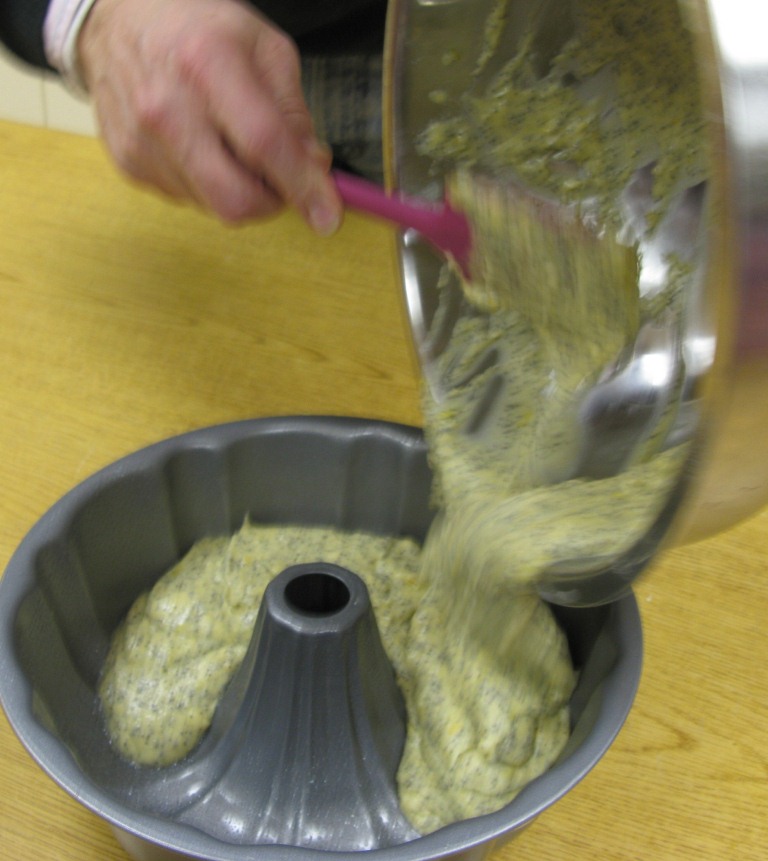
Pouring batter into bundt pan

To finish the batter, fold in 1/3 cup popper seeds, 1 teaspoon vanilla extract and the grated zest from two oranges. Pour the mix into a greased bundt pan and bake in a 325-degree oven for 55 minutes, or until a toothpick inserted into the middle of the cake comes out clean.

Allow the cake to cool in the pan for 30 minutes, then invert the pan and remove the cake onto a serving platter. The final step is to soak the cake with a syrup of orange juice and sugar. Pour 1/2 cup orange juice and 1/2 cup sugar into a small sauce pan. Heat until bubbles begin to form, then simmer for about 5 minutes, or until syrupy. Use a long toothpick or skewer to poke holes deep into the cake, then pour the syrup over the cake.

Serve warm if possible. The kids might complain that their slices aren't big enough. Pay no attention. There will be plenty of cake left for the next day.