Showing posts with label breakfast in class. Show all posts

Thursday, June 30, 2011

And Now for Some Good News About School Food: Breakfast in the Classroom

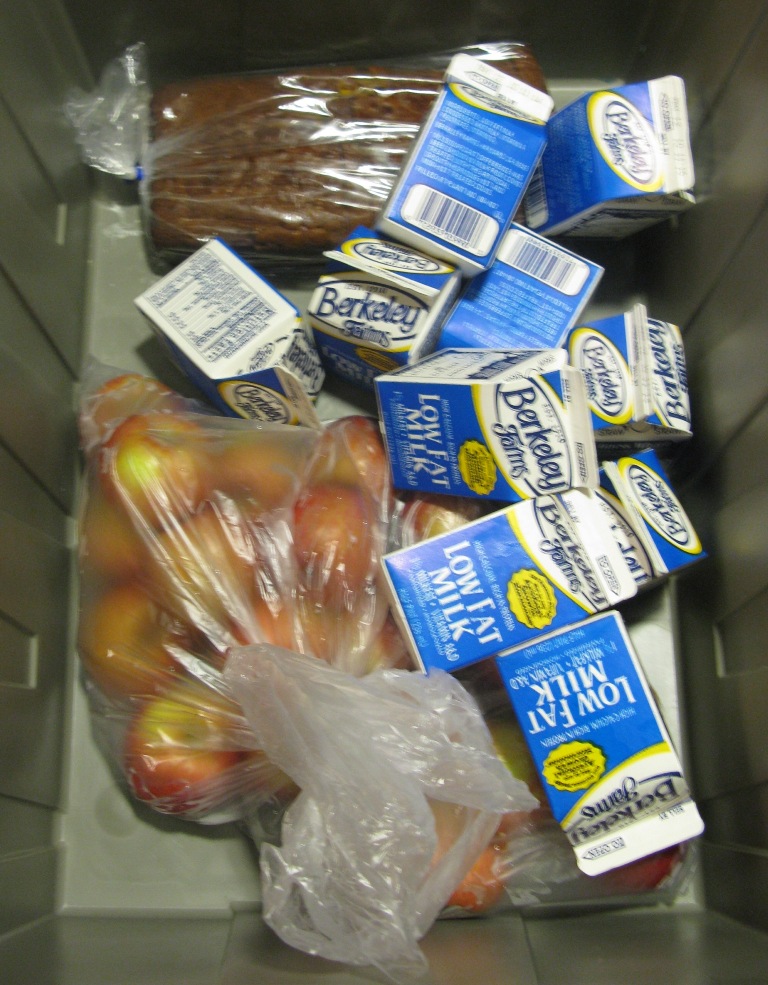
Berkeley's breakfast in a bin

By Ed Bruske

aka The Slow Cook

When I worked in Berkeley's central school kitchen a year ago one of the things that impressed me most was something I'd never heard of before: breakfast served in the classroom.

Every morning at the crack of dawn we'd start loading plastic bins. The meals were so simple: a loaf of banana bread, a bag of kid-size apples, cartons of plain milk. Sometimes there might be yogurt, or packets of Nature's Path organic cereal. At Martin Luther King Jr. Middle School, the bins were rolled out on shelves to the front of the "dining commons" where students soon arrived in pairs to carry them to their classrooms.

It couldn't have been easier. Yet participation was nearly 100 percent, and because of a quirky California real estate tax law, breakfast in Berkeley generated "meals for the needy" funds on top of federal subsidy dollars, helping to pay for a scratch-cooked lunch.

When I left Berkeley, I wondered why every school district hadn't thought of breakfast in the classroom. But now many of them are. In fact, this may be the hottest new trend in school food.

"Breakfast is such a winner on so many levels. But it’s a federal program that’s underutilized," said Madeleine Levin, a senior policy analyst with the Food Research and Action Center (FRAC), which advocates on food access issues in schools. Most schools offer breakfast, but fewer than half of all children eligible for a free or reduced-price breakfast actually eat one. Last year 1.97 billion breakfasts were served in the federally-subsidized meal program nationwide, fewer than half the number of lunches--5.28 billion.

FRAC last year was one of several groups--including the National Association of Elementary School Principals Foundation, the National Education Association Health Information Network, and the School Nutrition Foundation--that partnered to help start classroom breakfast programs in five school districts: Dallas, Little Rock, Memphis, Prince George's County, Md., and Orange County, Fla. They received $3 million from the Walmart Foundation, about $2 million of which went to the schools, mostly to pay for equipment, such as refrigerators and coolers.

"Some principals felt uncomfortable changing their routines, as did some teachers and food service directors. We were able to address those groups at the school level to show them how this can work, how there can be a constructive process to plan and implement a program that benefits everyone," said Levin. "The power of the funding was to meld the partnership together."

According to Levin, it doesn't take much to start a classroom breakfast program. Yet research demonstrates that when children gather around breakfast in a familiar classroom setting, readiness to learn increases while tardiness and discipline problems decline. Eating breakfast also fights obesity. "It will benefit them for the rest of their life," says Levin. "It's proven in research to have a real impact."

Nothing beats breakfast at your desk

Here in the District of Columbia, there's been a marked increase in the number of children eating breakfast since breakfast in the classroom was implemented a year ago. Breakfast is served free to any D.C. Public Schools student who wants it. In 37 elementary schools where breakfast is served in all classrooms, participation stands at 78 percent, an increase of 26 percent from the year before. Meanwhile, in elementary schools that serve breakfast only in the cafeteria participation is just 10 percent.

D.C. Hunger Solutions has been working closely with local schools to make the new breakfast program a success.

Levin doesn't advocate breakfast in the classroom as a money maker, but school food consultant Kate Adamick does. Especially in districts with large numbers of needy students, federal subsidy dollars can more than pay for breakfast, meaning extra cash to help support the entire meal program. In "severe need" schools, the federal reimbursement rate is $1.76, compared to the usual $1.48.

Adamick says the break-even point for schools typically occurs when at least 50 percent of the student body qualifies for a free or reduced-price meal. "For districts that exceed 60 percent free and reduced, breakfast in the classroom programs generally result in significantly increased net revenue for school districts," Adamick said. "The higher the level of free and reduced kids, the higher the net revenue generated."

Schools can increase the profitability of breakfast by cooking more from scratch, Adamick says. "The good news is that simple scratch-cooked breakfast meals are often much less expensive than the highly processed products that are currently served in most schools, which helps keep the costs in line and lowers the free and reduced levels necessary for a financially viable breakfast in the classroom program. "

The USDA's proposed new meal guidelines could upend that math, however. By requiring more whole fruit, whole grains and adding a 1-ounce serving of meat (or meat alternate), the guidelines would add a whopping 51 cents to the cost of serving breakfast. Some school administrators say they may have to drop breakfast altogether.

Parents often express concerns that eating breakfast in the classroom will eat into the time children have available to learn. But teachers and school administrators say children are more focused when breakfast is served in the classroom, and eating a meal together creates a family atmosphere. At a school I visited in Boulder--Columbine Elementary--the beginning of the school day was moved up--from 8:30 to 8:15--to make room for breakfast in the classroom.

Breakfast delivery, Boulder style

I watched the kitchen manager, Margaret Traverton, load bins with apples, breakfast bars, and milk, then wheel the bins around the school on a cart, dropping them outside classroom doors. I went back a few minutes later to watch the children unload the bins and arrange breakfast at their desks. Assigning kids tasks--like unloading bins, or collecting trash--gives them a sense of responsibility, and takes some of the load off the teachers.

Chicago instituted breakfast in the classroom in all of its schools this year, sparking loud complaints. But Levin attributes the discontent there to requiring that breakfast be served in classrooms in even the most affluent schools, where many children may not need it. "The concerns are coming from a small group of parents," said Levin. "In other districts where they’ve gone district-wide it’s worked really well—Houston and Newark, for instance.

Here in D.C., schools where less than 40 percent of students qualify for free or reduced price meals can opt not to serve breakfast in classrooms. It's offered in the cafeteria instead.

Levin says many other school districts are exploring the breakfast-in-the-classroom option. FRAC has received more than 100 inquiries just from its website. But the next frontier is getting older kids interested in eating breakfast. At one high school here in D.C., I met with students who would rather grab a bag of chips at a corner convenience store than eat a breakfast for free at school.

"If you talk to marketing people they’ll tell you that making something free doesn't necessarily make it attractive," said Levin. "It’s not cool. Or to use a more modern term, it’s not 'fresh.' They’d rather hang out in the hallway with friends."

In D.C. last year, middle school participation in breakfast was just 21 percent. It was even less among kids in high school: only 11 percent.

So how do we make breakfast "fresh?"

This article originally appeared at the Beyond Breakfast blog.

Monday, January 31, 2011

Participation Jumps in D.C. Classroom Breakfast Program

The number of kids eating breakfast at school leapt 29 percent in the first month of the current school year here in the District of Columbia following adoption of a breakfast in the classroom program, according to a new report [PDF] from the D.C.-based non-profit Food Research and Action Center.

The figures mean that an additional 5,900 children who might not have been eating breakfast before are now getting a government-sponsored meal before classes started.

Breakfast is offered universally free to all public school children in the District. Last year, a "Healthy Schools Act" approved by the D.C. Council mandated that all schools where more than 40 percent of the students qualify as low-income must also offer breakfast in the classroom.

Prior to the new law, breakfast participation lagged significantly the number of children who ate lunch. In the 2009-2010 school year, for instance, the average number of students eating breakfast each day was around 18,000, reports FRAC, compared to nearly 38,000 who ate lunch.

Participation in breakfast soars to nearly 100 percent when it's offered free in the classroom. That means more kids better able to focus on learning when classes start. It also means schools take in far more federal meal subsidies that they can use to improve the food at lunch.

FRAC calculates that if breakfast participation rose to 60 percent citywide, the District would take in more than $1 million in addition federal subsides annually.n Two states already have achieved the 60 percent goal: New Mexico and South Carolina.

Chicago schools recently adopted a plan to offer free breakfast in the classroom to all 410,000 of its students.

Some parents have complained that breakfast served in the classroom would interfere with valuable lesson time. But schools that have adopted breakfast in the classroom have seen few disruptions. Many simply start the school day a little earlier, and teachers report kids are more focused.

Monday, June 7, 2010

Breakfast in a Bag

By Ed Bruske
aka The Slow Cook

Here's my first photograph of the new "breakfast in the classroom" in D.C. schools, taken last Friday. My daughter's school held an all-day May Day celebration (delayed until June because of the heat), and for some reason the breakfast that had been carried to the classroom from the cafeteria was never eaten.

As you can see, the food is transported in insulated travel bags, the same bags the school has used in the past to take fruits and vegetable to the classrooms for mid-morning snacks. A quick inventory revealed Honey Nut Cherrios in plastic tubs, plastic "sporks," packets of graham crackers, fresh oranges and plain and flavored milk.

According to reports from parents and students, hot items were included in the breakfasts when the pilot project began last week, but lately only cold cereals have been served.


While I was reporting on school meals recently in Berkeley, CA, I had an opportunity to pack breakfast bins for that school district's breakfast in classroom program. Breakfasts in Berkeley are much simpler and generate less waste. In this example you see a loaf of home-made banana bread from a local bakery along with kid-size apples and plain, organic milk.

On other days the bins contain packets of organic Nature's Path cereal, and sometimes juice alternates with the milk. You don't see any plastic eating utensils in the bins. When cereal is served, the students either eat it directly out of the packet, or they can pour it into the milk carton.

The Berkeley breakfasts contain much less sugar. A 1-ounce serving of Nature's Path Oaty Bites contains five grams of sugar, compared to 9 grams of sugar--a bit more than two teaspoons--in a serving of Honey Nut Cheerios. Berkeley does not serve flavored milk. The strawberry-flavored milk served at breakfast in D.C. schools contains 28 grams of sugar, a bit less than Mountain Dew.

Which breakfast would you rather your child ate?

Tuesday, June 1, 2010

Breakfast in the Classroom, D.C. Style

By Ed Bruske
aka The Slow Cook

With no fanfare at all, schools in the District of Columbia have been rolling out a program of serving breakfast in classrooms instead of in cafeterias. The idea was piloted in a single elementary school at the beginning of the year. In April it was extended to 11 more schools. Last week, six more were added including my daughter's school, H.D. Cooke. More are slated to come on line beginning today.

Originally scheduled to begin on Monday, but then postponed, our new breakfast program started in earnest on Wednesday when we arrived at school to find the cafeteria closed. No more kids waiting in line for trays of hot food or cereal and milk, juice and Goldfish Grahams. Instead, food was packed into insulated bags and carried to the classrooms. My daughter reported that on the first day kids had a choice of a hot meal--pancakes and syrup--or a cold meal--cereal and milk. I had hoped to sit in as an observer and take pictures, but so far, I have not gotten a response from the chancellor's office to my request for a clearance.

Instead, I rely on reports from parents who have been sitting in on classroom breakfast. Here's one:

"The breakfast is delivered to the classrooms in those blue insulated bags that they've always used to deliver the fruit/vegetable snacks," this parent wrote in an e-mail. "On Wednesday, day 1, the bags brought to [name of student]'s preschool class contained flavored milks, so not surprisingly, several kids were having their sugary Cinnamon Toast Crunch with chocolate milk. By day 2 the flavored milk had disappeared -- I'm not sure why, but I know the preschool teachers don't let the kids have flavored milk for lunch except on Fridays, so maybe they told whomever to only send white milk for breakfast.

"Day 2's choices were Honey Nut Cheerios or a warm pizza bagel half in a bag, plus an orange. Today it was a sugarfest: Cinnamon Toast Crunch or Frosted Pop Tarts, each accompanied by a differed kind of cookie (regular graham crackers or those fish-shaped ones). Fruit was a whole pear.

"For the most part the fruit did not get touched and in theory would have to go in the trash, because it was already "served." Same goes for the undrunken milk. I told [name of teacher] that I was appalled by the waste...Aargh!"

My daughter, who is in the fourth grade, also reported that by Friday there was no more hot food being offered in the classroom and that only plain milk was being served.

Food access advocates have been pressing for breakfast service in classrooms as a way of ensuring that needy kids are fed at the beginning of the day, before classes begin. Breakfast is universally free for the 45,000 students who attend D.C. Public Schools. Under "Healthy Schools" legislation recently passed by the D.C. Council, the city would extend free breakfast service to another 25,000 students who attend charter schools by providing an additional 30 cents for each breakfast served to students who qualify for reduced-price meals based on income.

"Healthy Schools" also includes an additional 10 cents per meal to help pay for breakfast, in addition to federal subsidies of up to $1.46 for students who qualify for a free meal.

Because schools receive federal subsidy payments for breakfast as well as lunch, districts with high percentages of needy students can generate a lot of money by serving breakfast to a captive audience in the classroom, rather than waiting for kids to show up in the cafeteria. In Berkeley, CA, for instance, participation in breakfast exploded, from 9 percent district-wide to 61 percent after classroom breakfast was implements. Participation in elementary and middle schools stands at a whopping 96 percent, and means that income from breakfast helps pay for a pricier lunch made from scratch with fresh ingredients.

But a key to the Berkeley success story is keeping breakfast simple. Small packets of cereal alternate with bagels and cream cheese, juice with plain milk, and typically a piece of fresh fruit, such as an apple, is served. That's it. If D.C. schools follow suit, then we could see the end of hot breakfasts consisting of things like scrambled eggs pre-cooked and shipped frozen from Minnesota, pizza bagels, and frozen egg-and-sausage quesadillas. It would only be a short step from there to phasing out sugary processed treats such as Pop-Tarts and Goldfish Grahams, and eliminating all the sugar kids are consuming with their chocolate and strawberry milk, typically served with juice as well.

Indeed, breakfast in the classroom, done correctly, could be a big win for everybody: healthier food for the kids, more money for school meal programs and less waste for the landfill.